
An overview of our sell-side M&A services






The SEG Approach
Why we built SEG this way.
Your software isn't custom-built for every customer. Why should your M&A process be?
Software evolved from custom-built implementations to configurable platforms for a reason: the best results come from combining a proven foundation with the flexibility to address what is different.
We believe the same principle applies to M&A.
SEG has spent more than 25 years refining a repeatable approach to software M&A, then applying it to the specific company, market, buyers, and objectives in front of us.
In this series
01
The software M&A market has changed along with your options
~3 min
02
AI is changing what buyers value and what they question
~ 4 min
03
Why the way an advisor works matters
~5 min
04
Know who will be sitting beside you
~3 min
05
An offer isn't the same as a market
~5 min
06
Protect your leverage until the deal is done
~5 min
07
A good outcome is more than a number
~3 min
08
Why we built SEG this way
~38 min
Chapter 01
The market you're considering isn't the market you remember.
Twenty-five years ago, a software founder considering a sale had a relatively small universe of potential buyers. Today, private equity firms, PE-backed software companies, and strategic acquirers have fundamentally changed that landscape.
That matters because a larger buyer universe creates something founders did not always have: more potential paths forward.
But more buyers do not automatically create a better outcome. The important question is which buyers will see the greatest strategic or financial value in your company and whether enough of them are engaged to create real options.
Understanding the market before you need to make a decision can change the decision itself.
"When I first joined Software Equity Group, the private equity community wasn't there."
Allen Cinzori, Managing Partner & Owner
Chapter 02
AI is Changing What Buyers Value and What They Question
AI is creating new opportunities for software companies. It is also changing the questions buyers ask about what will remain valuable over time.
Allen looks at the impact through three lenses.
Product. How can AI make the product more valuable to customers by expanding what it can do, improving the experience, or strengthening the role it plays in a customer’s workflow?
Operations. How can AI change the economics of the business? Greater efficiency can improve margins, create operating leverage, and give companies more capacity to reinvest in growth.
Durability. This may be the most important and most difficult question. If AI makes software easier and less expensive to build, what about your company becomes harder to replicate?
That puts greater importance on the advantages that cannot be recreated simply by writing code: domain expertise, proprietary data and context, embedded workflows, customer relationships, integrations, distribution, and the position a company holds within its market.
For founders, the question isn’t simply whether AI makes their company more valuable. It’s whether AI changes what makes their company durable.
"We could be sitting in a really interesting position from application software where we're at the peak of value." (Recorded in the fall of 2025)
Allen Cinzori, Managing Partner & Owner
Chapter 03
Why the Way An Advisor Works Matters
An M&A advisor does more than run a process. The way they think about their role influences the decisions a founder makes before, during, and throughout a transaction.
At SEG, that starts with understanding the company itself. We lead with the product—what makes it valuable to customers, where it fits in the market, and why one buyer may see more value in it than another. That understanding shapes how the company is positioned, which buyers are approached, and how competition is created.
Behind the process is a simple objective: give founders clarity, create real options, and advocate for what matters when it’s time to make a decision.
Because a good M&A process shouldn’t simply get you to a transaction. It should put you in a stronger position to choose your outcome.
Culture
Who we are.
- Founder-first
- Honest
- Transparent
- Collaborative
- Team-based
Process
How we work.
- Product-first
- Disciplined
- Demand creation
- Competitive tension
- Leverage protection
Results
What it gives you.
- Credible options
- Stronger leverage
- Better terms
- The right fit
- Confidence in the outcome
"Our competitors can't overnight replicate what we have. We're just built different."
Allen Cinzori, Managing Partner & Owner
Chapter 04
Know Who Will Be Sitting Beside You
Choosing an M&A advisor means choosing the people who will represent your company through important decisions, difficult conversations, and negotiations.
At SEG, the senior team you meet at the beginning of your process stays involved throughout the transaction. Our collaborative model is built into how the firm operates and how our people are compensated, so experience and relationships are shared across every deal.
That matters when a buyer raises an unexpected concern, terms change, or there are competing paths to evaluate. You want people beside you who know your company, understand what matters to you, and have been there before.
"We are creating an organization that is a team instead of an organization that is a group of teams."
Allen Cinzori, Managing Partner & Owner
Chapter 05
An Offer Isn't the Same as Market Value
Receiving an inbound offer can feel like you already have your answer. A credible buyer is interested, the valuation may look attractive, and avoiding a broader process can seem faster and easier.
But an offer tells you what one buyer is willing to pay. It doesn’t tell you how other buyers might value the company, whether another structure would better fit your goals, or what terms could change through negotiation.
There is also an experience gap. Most founders sell a company once. Professional buyers acquire companies for a living.
A competitive process helps close that gap by providing context, options, and leverage before a founder must make an irreversible decision.
The math of bringing in the right advisor is rarely close. The math of trying to skip one is often catastrophic.
"You're going into a game with a high school team and competing against an NFL-level team."
Allen Cinzori, Managing Partner & Owner
Chapter 06
Protect Your Leverage Until the Deal is Done
The highest offer isn't always the best outcome. Price matters, but so do structure, terms, retained equity, and what happens between signing an LOI and closing the transaction.
One of the most important considerations is exclusivity. Once a founder agrees to negotiate with only one buyer, the dynamics change. Competition disappears, the buyer gains leverage, and the founder has fewer options if terms begin to move.
That is why SEG works to preserve competition and optionality for as long as possible—and keep exclusivity as short as the circumstances allow.
Leverage is easiest to protect before you give it away.
"Don't lose your leverage. Don't get into exclusivity with the buyer too soon."
Allen Cinzori, Managing Partner & Owner
Chapter 07
A Good Outcome is More Than a Number
The financial outcome matters. So do the terms, the buyer, what happens to the team, and what comes next for the founder.
But Allen has another measure of a successful transaction: the hug.
An M&A process can be long and demanding. There are difficult decisions, unexpected turns, and moments when a founder needs someone beside them who understands both the transaction and what matters most to them personally.
At the end, we want founders to feel that we understood what mattered, advocated for it, and helped them make decisions they can stand behind.
The transaction closes. The relationship shouldn’t.
"Here we are, investment bankers, and we're striving for the hug from our client."
Allen Cinzori, Managing Partner & Owner
The Full Conversation
Why We Built SEG This Way
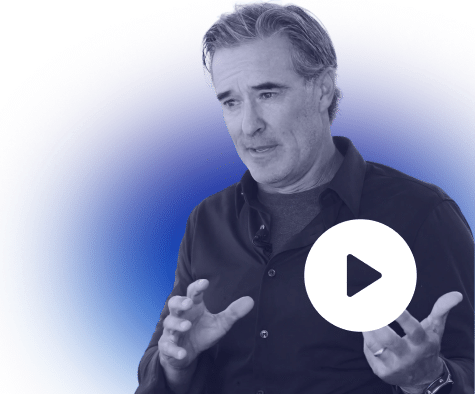
Seven chapters distill the key ideas. Here, Allen shares the full story behind them: what 25 years in software M&A has taught him, the convictions that shaped SEG, and why we still believe that how an advisor works can change the outcome.
Frequently Asked Questions
How is SEG different from other M&A advisors?
How is SEG's deal team structured?
What does SEG believe an M&A advisor's role should be?
What types of software companies does SEG advise?
When should a founder start talking to an advisor?
Start a Conversation
Know where you stand before you decide what comes next.
You don't need to be ready to sell. You may have an offer in hand, be thinking about a process, or simply want an experienced perspective on your company and your options.
We'll tell you what we see, answer the questions we can, and be direct about whether we think there's anything you should do next.
All conversations are confidential.