On-Demand Webinar

From Gut-Feel Pricing to Unlocking Millions in Hidden ARR

VIDEO LENGTH 49:12 MINUTES

Most software CEOs launch their company with a focus on product, but pricing is often a shot in the dark. In this webinar, former SaaS founder Paul Lachance and pricing expert Stephen Forth unpack the costly reality of reactive pricing and the transformative upside of getting it right.

They walk through real-world case studies, like a pricing shift that boosted ARR by 9x, and show how aligning pricing with value can improve retention, gross margins, and valuation. If you’re asking, “Are we leaving money on the table?” this conversation might help you decide.

TRANSCRIPTION

Webinar Introduction and Agenda

{Austin Hammer:} Hi everyone, and welcome to SEG’s live webinar discussion, Craft a Winning Pricing Strategy to Maximize ARR Growth and Valuation. I’m Austin Hammer, the principal here at SEG. We’re excited for our conversation today. Thanks to our guests for tuning in. Today, we’re going to cover several areas, including why pricing is a critical growth driver, how to plan and execute price changes, how to use pricing to improve metrics, and ultimately how those metrics impact company valuation. We are excited to welcome our featured guest, Stephen Forth, CEO and co-founder of SaaS pricing solution Ibbaka, who will provide strategic guidance and actual insights for the implementation of effective pricing strategies. He’s joined by SEG’s very own Paul Lachance. Paul serves a key role in SEG. As both the former SaaS founder and a previous client of SEG’s, he will provide a unique perspective grounded in real-world experience. This discussion should take about 45 minutes, after which we will answer a few questions from the audience. It’s my pleasure to hand this off to SEG’s chief industry strategist, Paul Lachance.

The Role of Pricing in Building a Valuable SaaS Company

{Paul Lachance:} Thanks, Austin, and welcome, everybody. We are excited to have you join our fascinating conversation today that can help SaaS organizations in both the short and long term. Pricing strategy is an essential aspect of building a strong company. In the short term, you will build a better financial foundation that can make you a stronger, more agile, and formidable competitor. In the long term, a smart pricing strategy will help you build a more attractive SaaS organization to the buyer and investor communities and ultimately attain a better valuation. I know this for three reasons. My background is that I’m a former SaaS founder and SEG client who went through a successful exit. And although I’m very happy with the results, I know I could have done better with a smarter pricing strategy and resulting improved metrics. As Chief Industry Strategist, Technologist, and Evangelist, I now work with SEG clients even informally well before any M&A process to share my wisdom and improve client outcomes. The second reason we know this is that SEG works with the many SaaS companies we bring to market and successfully find their next partner, private equity, or strategic. We personally see how strong pricing strategies improve metrics and translate to better valuations. And the third reason is our relationship with the broader buyer-investor community. They tell us the importance of solid SaaS financials, several of which are heavily influenced by a strong pricing strategy. We will dive into this conversation, greatly aided by a seasoned industry expert, Steven Fourth from Ibbaka. Welcome, Steven. Can you give us an introduction?

{Steven Forth:} Thank you, Paul. So like Paul, my roots are in creating, growing, and exiting B2B SaaS companies. In 2006, I had recently exited one of my companies and was taking some time off when I was approached by a Boston-based strategy consulting firm, Monitor Group, now part of Deloitte. I was asked to look at different frameworks they had developed to see what could be turned into software and taken online. I looked at several different things. But what got me excited was pricing. Because as I learned more and more about pricing, I realized that if I’d known this stuff earlier in my career, I would now be a much wealthier guy.

How Does a Better Pricing Strategy Help Software Companies?

{Paul Lachance:} As we get into the webinar today, I want to start with a spoiler alert. If you pay attention to the wisdom that Steven is going to share with us today, you will improve your valuation. One of the most common questions we hear when we’re talking to prospective SEG clients is, “What are the multiples around ARR and other metrics?”. And although I’m not going to share any specific numbers today, I will tell you this: if you have a strong pricing strategy, and it results in improved metrics, you will move to a higher multiple, maybe even more, just by having a good pricing strategy. So important stuff we’re going to cover today that I wish I had known more when I was younger in my career.

As I thought about my past and pricing strategies, I think the best way to describe it would be throwing darts. And I know that’s not uncommon for SaaS founders who are building growing software companies. I mean, in my situation, pricing was often driven by sales, clearly was reactionary, sometimes tied to quarterly bookings, monthly bookings, not a lot of planning, they’re discounting often on a whim, often at around a competitive response. What I didn’t really understand is the relationship to product roadmap, you know, that classic squeakiest wheel is asking you to add features to your product, and you’re not sure whether we should create another module, should we do a pricing increase, the relationship to that. And then the fourth example I’ll use is these user-type challenges. We had a price per user. And we wanted to try to attract additional users to subscribe. But maybe they were more limited users. And we’re always at odds with what we charge, which never worked out properly. The best way to describe this is that we didn’t have a strategy. There were consequences. And I would say that you could describe them as poor economics. And again, I’m very happy with where we ended up. But had we paid attention to these kinds of concepts earlier on, we would have been able to improve these metrics, such as ARR, gross margin retention, and others that we’ll talk about. In my case, I could have done better. So, with that said, we’ll turn this back over to Steven, and we’ll start with an important first question: how would a better pricing strategy have helped me?


Strategic Pricing Moves that Drive Revenue and Retention

{Steven Forth:} Thank you, Paul. So why don’t we start by looking at some concrete examples?  My first example is a data provider for financial data. This company was charging a flat fee of $19,000 per year for its data assets that it provided as a subscription. Working together, we segmented their market by value and found a high-value segment that was willing to pay an awful lot more. And in fact, we were able to increase the price for that segment by tweaking the packaging a bit, not a lot, from 19,000 per year, up to $179,000 per year, more than a 9x increase in annual recurring revenue for those customers. Another example was with a scheduling provider for a health care company for health care companies. Now, this company was charging all users the same amount, even though some slots were worth more than $2,000 an hour. And other slots were only worth $200 an hour. They redesigned their pricing to take advantage of this difference in the value of slots. And the result was a more than 40% increase in annual recurring revenue. Another example is a company that provides a software platform for manufacturers that helps them implement digital product service solutions. They had a flat platform fee. By adding a new pricing metric for connected devices and scaling that to the value of the device, they were able to increase their net revenue retention from 97% to about 120%.

And these three examples are our typical pricing moves that can have a huge impact on results. So, the first pricing move here is to segment your market by how your customers get value and then package and price for each market segment. Peanut Butter spreading, where everyone gets the same product at the same price, almost never optimizes your revenues. Another common tactic that works for many people is differentiating pricing for different types of users. If different users have different use cases and different value paths, you should be pricing them differently. And this can have a big impact on your revenue. And finally, you want to make sure that you are packaging, so that you can create ways to pull all the different growth levers. Grow and package is when you don’t need to upsell or change the package. But you have some form of usage or consumption pricing metric, where use increases, your revenue goes up. Upsell is when you move up to a good, better, best packaging strategy. And you can move company move customers, from your good to your better to your best tiers. And finally, cross-selling is the opportunity to sell other products or services that enhance the use and the value of your own package. So, these are our three pricing moves that we should all be looking at and asking if we have opportunities to make these moves on the board.

So, good pricing is where pricing aligns with value. And the reason this is so important is that people will pay more if they know they are paying for something that is of value. And really, in B2B SaaS, that means economic value, good pricing, and targets specific segments. And there are almost always some segments where you have an opportunity to raise prices. And one should also add a pricing metric that captures usage. And this makes sure that you can grow in the package, which is one of the most powerful ways to increase your revenue.

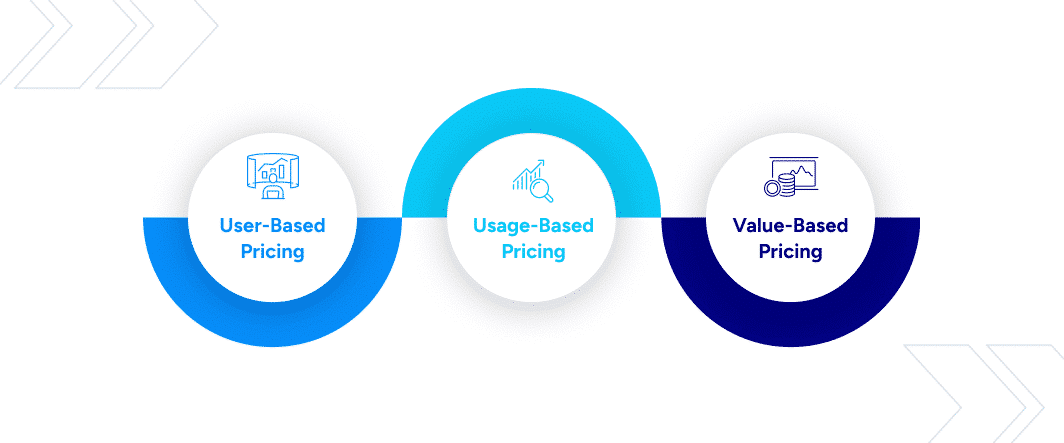
Now, some of you are probably asking the question, in the current economy, where there are some headwinds, does usage-based pricing really work? Maximo, which is a SaaS billing platform that gathers a lot of data on this, recently released a report, which showed that in 2023, companies that included usage-based pricing, or what they called consumption pricing, outperformed those with pure user-based subscription pricing in three or four quarters. And if you look at additional data from Zora, you’ll find that companies that receive between 20 and 30% of their revenue from usage-based pricing outgrow their competitors by between 10 and 19%, depending on the SaaS vertical.

Reactive Pricing is Common but Strategic Pricing Builds Value

{Paul Lachance:} Regarding the consumption-style pricing, if I understand you correctly, Steven, tying it into tickets, work orders, etc. would be the primary method within your platform, and having that as opposed to a price per user?

{Steven Forth:} Yes, and we’ll come to this in a couple of minutes, Paul. However, the critical thing here is that the usage metrics should not just measure use; they should measure how your customers are getting value. So, if you can find a usage metric that connects to the value that you’re providing to your customers, that’s what gives powerful pricing.

Great question, thank you. So, there are some common approaches to pricing. Paul mentioned that the most common type of pricing is random or accidental pricing. And I would say that this occurs in somewhere from 50 to 70% of SaaS companies. So, if this is where you find yourself, don’t worry, you’re not alone; many people start there. However, there’s nothing good about this approach to pricing. And the reason for that is it’s very hard to improve something that’s random. Pricing must be adaptive and improve, constantly adapting to the market as it changes. Another common approach is cost plus, where you understand your costs, and you add your target margin, and that gives you your price. The good thing about this is that it can protect your margin. The problem is, though, that it leaves a lot of money on the table. And unless you are the low-cost provider in your industry, it’s a failing strategy. And the reason for that, of course, is your competitors. So, some people price relative to a competitor; they price a little bit higher or lower than the major alternatives in the market. This is a good start. Being focused on competitors really improves your market awareness. And that’s a critical success factor in pricing. The problem, though, is that it allows competitors to control the conversation and to define the terms on which you’re going to compete, which is not really a successful long-term strategy. So, the next thing that people do is they price based on their customers’ willingness to pay, or their pricing; people love to say WTP. This is also a good approach because it gets you listening to customers. And that’s critical. Any pricing conversation should be a conversation about value. And you can only understand value by listening to your customers. The problem with pricing based on willingness to pay is that it allows customers to control the conversation. And in the real world, willingness to pay is something you can shape. And the way that you shape it is with value-based pricing. And there are many studies showing that value-based pricing is the best way to optimize either for revenue growth or for profit, or to find the right balance between the two. The downside of value-based pricing is that it’s more complex; you’re going to need to invest in really understanding your competition, your customers, tracking your competitors, and you’re going to need a value model, a formal value model of how you’re creating value for your customers. And you’re going to need to monitor this over time. So, it requires more effort or investment. But if you can make that, it will have the biggest impact.

How to Use Good, Better, Best Pricing in SaaS

{Paul Lachance:} So, this concept about good, better, best means, I know this very well. In the industry I grew up in, you could go to just any competitor. And we’ve had a lot of competitors, you click on their pricing link at the top of the screen, and you’d see that ubiquitous matrix that nowadays seems to start with free and then moves to basic, professional, enterprise, call for pricing kind of scenario. And I vividly remember building spreadsheets where we took all our competitors and put them in there to try to figure out what our price is. Can you talk about good, better, best, how it works, and how you can optimize that?

{Steven Forth:} I want to start by saying that I think good, better, best, or GBB is slightly over-indexed today. It’s not always the best approach to packaging. It works best for a product lead growth company with easy-to-understand and straightforward offers. Having said that, there are two keys to success with GBP pricing. The first is to realize that there are two very different flavors of GBB. The first one, which is referred to as an align strategy, happens when you try to bring people into the right package for them right from the very beginning. So, if they should be in a better package, that’s what you tried to sell them; if they should be in a good package, that’s what you tried to sell them. A very different approach is the upsell strategy, where you try to use your good package as an attractor that you bring people into at a lower price. But your success depends on upselling. So, whenever you’re starting off, or even if you have a GBB approach, it’s essential to have clarity on which of these two approaches you’re using.

The second key to success for the GBB is to use the highest price offer to frame the price for the buyer. So, you’ve all been to a restaurant where there’s a very expensive bottle of wine on the menu. And as a result, you probably buy a higher-priced bottle of wine than you otherwise would have. And this is part of the psychology of good GBB pricing. If you have most of your customers in your best package, that is not a good thing. That means you have not properly designed your GBB pricing. You need to repackage and reprice so that there is a package that is framing a high value, and then you’re driving your revenue through the package below that. So, the psychology of how you frame your offer and anchor price in the buyer’s mind is critical with GBB pricing. There are a lot of anti-patterns here that Paul and I can go into in the Q&A if people are interested.

What SaaS Can Learn From Rolls-Royce, Google, and Salesforce

{Paul Lachance:} This next topic we’ll talk about is value-based pricing. I do a lot of writing, research, and lecturing on the concept of digital transformation, which, in its ubiquitous term, digital transformation, is when you can identify real-world challenges. And I’m referring to your customers’ challenges for those on the webinar, and how you can use technology in this case, SaaS technology, to make improvements or give opportunities for growth, create value. This has become a foundational aspect in value-based selling. It’s so important to how you think about your go-to-market strategy; I find it fascinating how you can tie that back into the pricing concept. So, I know Steven, you have some examples here on how to make that a little bit clearer.

{Steven Forth:} Let’s define a couple of key terms first. The pricing metric is the unit of consumption for which a buyer pays. So, for example, you pay for gas by the price per gallon. The value metric, on the other hand, is the unit of consumption by which a user gets value. How far will that gallon of gas get you? And finding a pricing metric that tracks the value metric is really the key to successful pricing. So, let’s look at some examples.

In the late 70s and early 80s, jet engine manufacturers such as Rolls-Royce and General Electric invested a lot of money in creating engines that were much less maintenance-intensive and easier to operate. But when they went around to the airline companies and tried to sell them these engines at a significant premium, the airline companies were skeptical. And they said maybe, but how do we really know we are going to reduce our maintenance costs? How do we really know that these engines are going to operate more efficiently? GE and Rolls-Royce invested billions of dollars in developing these new engines. And if they couldn’t get a significant price premium for them, it was going to be a big problem. The solution, though, was to change how they sold the engines. So instead of selling an engine, they would lease an engine, and they would only charge for time the engine was being used to power an airplane. And as a result, they were able to get a lot more revenue per engine, because they had shifted risk from the airline to themselves. The reason they could do that is that they had confidence in their analytics, in their knowledge of the engine, and in their understanding of how to operate and maintain it. This not only saved Rolls-Royce and GE but also created a whole new business model around leasing, which GE went on to build into a large business unit.

Let’s look at a more software-centric example. Back in the 90s, web advertising was paid by impressions or eyeballs. How many eyeballs were going to see an advertisement? Now, just having an ad appear on the page is not a very good pricing metric, because it doesn’t really track value. Think of all the things that pop up on your screen that you overlook. As an advertiser, should you be paying for that? But if someone clicks on your ad, that shows that they noticed it, and it was relevant to them, enough for them to take the next step. So, pay-per-click tracks value better than impressions do, and has basically completely replaced impressions as an advertising metric for anything that’s online. As a result, companies such as Google and Facebook could win most of the advertising revenues online, because they had a pricing metric that tracked value.

Another example of this is per-user pricing. For example, B2B SaaS is full of user-based pricing models. And I think the reason is that the first big success, Salesforce, used user-based pricing. And many people thought, if it’s good enough for Salesforce, it’s good enough for us. However, many applications are in areas where the number of users is not a good proxy for value. Again, looking at a health care scheduling provider that we worked with, they moved from a per-doctor fee to a care path completion fee. What the health systems that they serve really care about is how many care paths get completed, because that’s how the healthcare systems are getting paid. This led to an increase in the average contract value of 20% and is expected to improve their net revenue retention by five to 10 percentage points.

How to Create Pricing Power in a Competitive Market

{Paul Lachance:} The following topic is dear to my heart because I came from an industry with a lot of competition. Each platform was similar from a feature-functionality standpoint. How does this type of pricing work when you have companies with little or no differentiation?

{Steven Forth:} The key thing to be aware of is that value-based pricing only works if you have differentiation. If you have no differentiation, you will be forced to default to competition-based pricing. But there are lots of different ways to differentiate. Differentiation is not just dependent on the features of your product. As an example, a company in New Jersey, which is a famous example of pricing space, was selling construction fill. You know, this is the stuff that is used to fill holes. And it doesn’t matter what’s in it as long as it fills the hole. Hard to think of something that has less differentiation than this. However, there was one company that was able to find differentiation. While their competitors said, “we’ll have that load to you sometime tomorrow” (which meant the construction company had to have people and equipment ready sometime tomorrow), this company promised delivery within one hour and took a pricing penalty if it could not deliver within that window. As a result, they increased their pricing by about 3%, which is in a very low margin cost-driven industry – that’s a big deal because that’s money that dropped directly to their bottom line. The lesson here is that there are many ways to find differentiation. Company leadership must always consider this and drive their competitive and value-based differentiation.

How and When Should You Increase Price?

{Steven Forth:} The key answer here is you should always be asking if you can increase prices. You should not be doing this in your annual reviews; this should be a topic that you’re asking every month. However, price increases that are the same for all of your customers, regardless of who the customer is and how well they are doing, often fail. Before you increase prices, you must ask two questions. The first is, are you delivering value? And how much value are you delivering for each of your customers? The second question is, how much of that value are you capturing back? Are you getting paid fairly for the value you’re delivering?

So, in a well-run company, 70% of one or more of the customers will be in that top right green quadrant, where you’re providing a lot of value, and you’re getting well paid for that value. Now, you can’t be complacent here; if you’re complacent, things will drift down to the lower red quadrant over time. So, you always need to ask, “How can I create more value?”, and how can I capture that value, whether that’s through product innovations, through better marketing segmentation, through service differentiation, whatever it is, you always must be driving up and to the right. But then there are these customers in the lower left red quadrant. Here, the first thing you need to do is look at them and say, “Can I create more value for some of these customers?” And if you can create more value, figure out how to do so and move them up into that top left quadrant before you try to shift them over into the green house.

However, there will be some customers for whom you don’t know how you can create more value for their problem; maybe they should not have been your customer in the first place. For those customers who are likely to churn, that’s okay. It’s alright to lose customers who are not providing you with a lot of value. And if you move them over to this bottom right quadrant, well, at least you’re making enough money that you can invest to figure out ways to start increasing value.